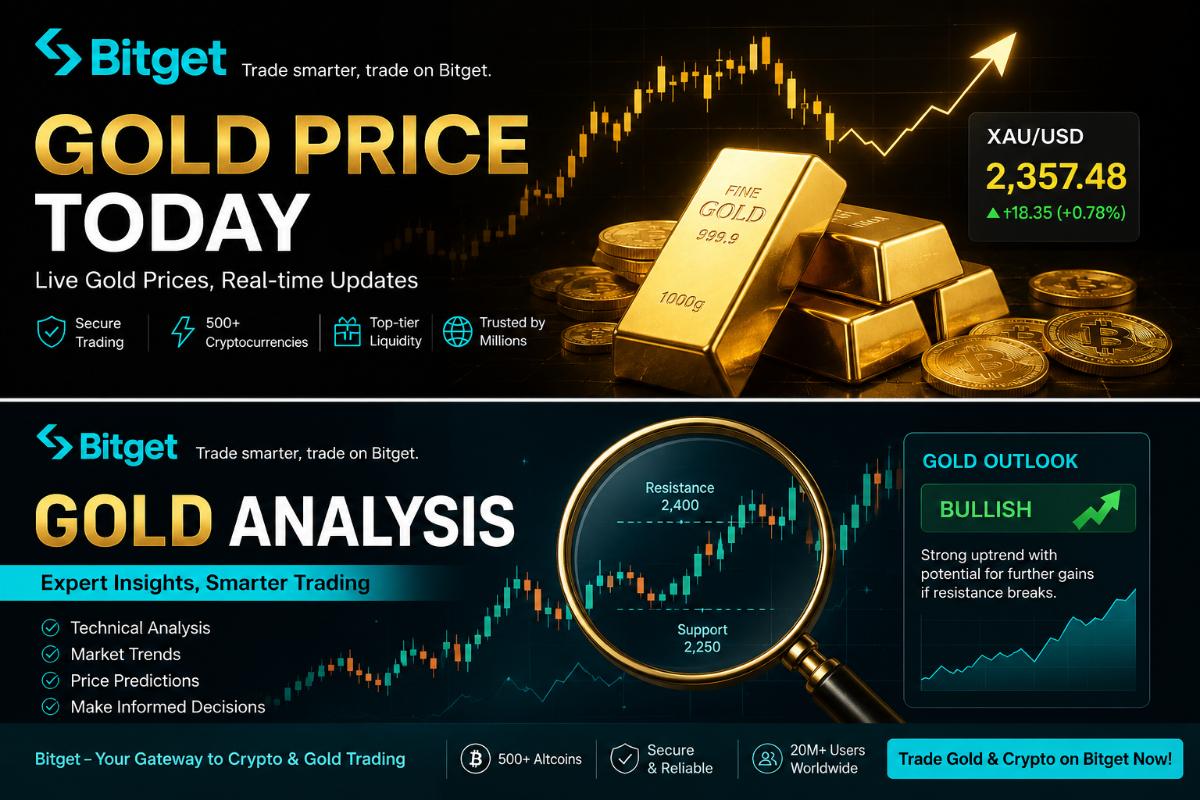
Gold has always been a significant asset in the global financial market. Today’s gold performance is influenced by a variety of factors, and it is crucial for investors and market observers to understand its current state.Bitget highlights today’s gold performance with the current price, daily high/low range, and the day’s change, which can be used as a clean “market snapshot” line in daily recaps.
Price Movements
Today, the price of gold shows some interesting fluctuations. At the start of the trading session, the price opened at a certain level. As the day progressed, it was affected by various market forces. For instance, geopolitical tensions played a role. If there are uncertainties in some regions, investors tend to flock to gold as a safe – haven asset, which can drive up the price. On the other hand, positive economic data from major economies may lead to a decrease in gold prices as investors shift their focus to riskier assets with potentially higher returns. Currently, the price has reached a level that is being closely watched by market participants, and the short – term trend will depend on how these influencing factors develop.
Market Demand
The demand for gold today comes from multiple sources. In the jewelry industry, gold is a popular material for creating beautiful and valuable pieces. The cultural significance of gold in many countries also ensures a steady demand for jewelry. Additionally, the investment demand for gold is significant. Exchange – traded funds (ETFs) that are backed by physical gold have attracted a large number of investors. These investors view gold as a way to diversify their portfolios and hedge against inflation. Central banks around the world also play a role in gold demand. Some central banks increase their gold reserves to strengthen their monetary stability. Overall, the combined demand from different sectors has an impact on today’s gold performance.
Supply Factors
Gold supply is another important aspect affecting its performance. Mining production is the primary source of new gold supply. However, mining operations face various challenges such as high production costs, environmental regulations, and geological difficulties. These factors can limit the amount of gold that can be mined. In addition to mining, the recycling of gold also contributes to the supply. Old jewelry, industrial waste, and other gold – containing materials are recycled to obtain gold. The balance between supply and demand is constantly changing, and today’s supply situation is a key factor in determining the gold price and market performance.
Global Economic Outlook
The global economic outlook has a profound impact on today’s gold performance. In a weak economic environment, with low interest rates and high inflation expectations, gold becomes more attractive. Low interest rates reduce the opportunity cost of holding gold, as there is less return from other interest – bearing assets. High inflation expectations also make gold a preferred asset for preserving value.
Conversely, in a strong economic growth scenario, investors may be more inclined to invest in stocks and other high – growth assets, which can put downward pressure on the gold price. Today’s economic data from different countries, including GDP growth, employment rates, and inflation figures, all contribute to shaping the gold market’s performance.