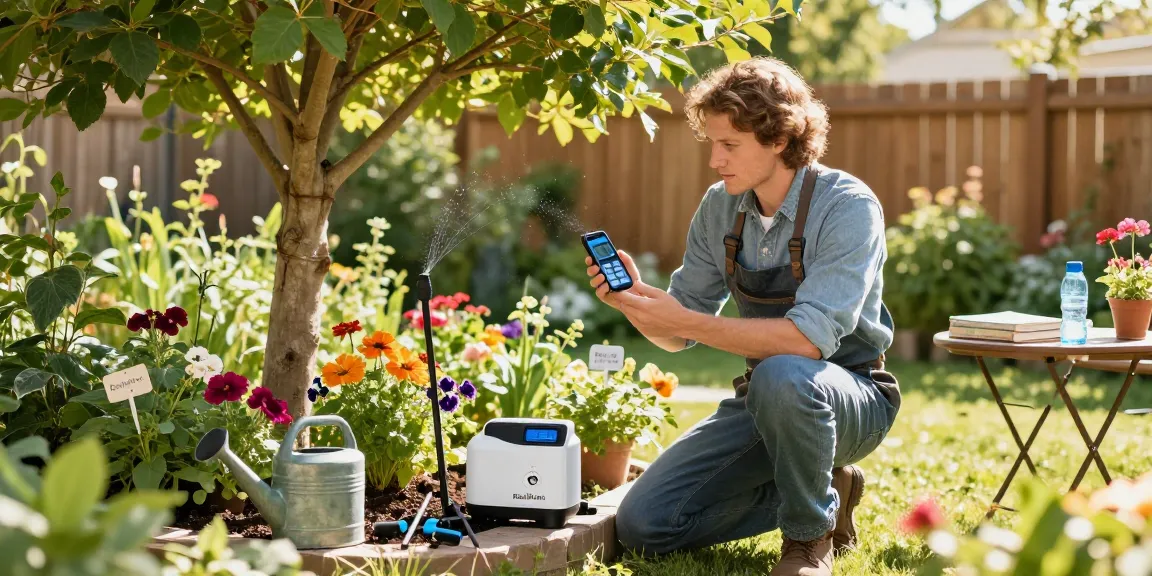
When Laura noticed her July water bill spike after a record-hot week, she stood in her driveway watching sprinkler heads spray empty sidewalk for ten minutes more than they needed to. Her tiny front lawn has patchy spots and clay soil that soaks slowly—classic waste. She needed a solution that matched the watering challenge to the right hardware: precise drip for her raised beds, a smart timer for zones, and a simple soaker for the flower border.
Why smart irrigation actually reduces water waste (and pays for itself)
Problem: Many homeowners run sprinklers on fixed timers that ignore weather, soil, or plant need—so they water when it’s raining, in the heat of day, or longer than roots can absorb. That’s wasted water and higher bills. A typical automatic system can lose water through overwatering, evaporation, and runoff.
Solution: Smart irrigation systems use weather data, soil moisture, and plant-type schedules to water only when needed. According to the EPA WaterSense program, properly installed smart irrigation controllers can save up to 8–30% of landscape water use. For an average U.S. household that’s thousands of gallons per year; some local extension services report savings equivalent to 1,000–15,000 gallons depending on climate and setup. A WiFi timer such as the RainPoint model lets you pause watering from your phone when a storm rolls in, or step down runtime during cooler weeks.
Concrete example
In Phoenix-like heat, a homeowner with a 1,500 sq ft lawn typically uses 50–80 gallons per minute on a traditional rotor system. Switching to a smart controller and trimming run times for cooler mornings can cut use by 20–30%, easily saving hundreds of dollars a season. If your bill usually spikes $50 in summer, expect a meaningful drop within months.
Which setup solves which watering problem?
Problem: One-size-fits-all systems waste money because different areas of a yard need different approaches. Match the zone to the tool and you minimize waste.
- Small lawn with portable needs: DIY mobile sprinklers on a timer reduce overlap and let you water on early-morning schedules.
- Large in-ground lawns: Smart controllers that manage multiple zones prevent overwatering by adjusting each zone to local conditions.
- Vegetable garden: Drip irrigation delivers water directly to roots; less evaporation, less runoff.
- Flower beds and shrubs: Soaker hoses or low-flow emitters gently hydrate roots without wetting foliage, reducing fungal disease and waste.
- Potted plants and hanging baskets: Self-watering spikes or reservoir systems give a slow, steady supply and reduce frequent manual watering.
Scenario pairing: If you have raised vegetable beds and a patchy lawn, use a precise drip kit for the beds and a smart-scheduled rotor or pop-up for the lawn. For example, a vegetable bed with 12 emitters running 30 minutes every other day uses far less water than hand-watering containers for ten minutes daily.
Common questions: installation, savings, and setup details
Q: How much will a smart timer cost and when does it pay back?
A smart timer alone ranges from $70 for basic WiFi timers to several hundred for multi-zone controllers. Payback depends on your current usage: homeowners who currently overwater or run systems without seasonal adjustment often see payback in 1–3 seasons. For instance, saving 20% on a $600 annual outdoor water spend yields $120 saved a year—so a $200 controller can pay for itself quickly.
Q: Will smart irrigation help in drought restrictions?
Yes. Smart controllers can reduce runtime automatically and let you follow local watering rules easily. They also allow remote control; if your municipality calls for emergency cutbacks, you can immediately reduce all zone schedules from an app instead of manual adjustments.
Table: Typical run times and water use for common zone types
Zone TypeTypical Run Time (per session)Estimated Gallons per SessionRotors (large lawn)20–40 minutes600–1,200Spray heads (small lawn)10–20 minutes150–400Drip for veg beds30–60 minutes5–30 (per 100 ft)Soaker hoses (flower beds)45–90 minutes30–100
How to set up a water-saving system for specific yard layouts
Problem: DIYers often wire everything to one controller and forget to optimize each zone. The result is same schedule for lawn, beds, and containers. That wastes water in beds that need less frequent, deeper watering and bathes foliage unnecessarily.
Solution: Break your landscape into functional zones and pick the right hardware per zone. Here’s how RainPoint recommends pairing tools to problems:
- Patchy small lawns: Mobile sprinklers on a programmable timer—run early morning, shorter cycles to avoid runoff.
- Large, irrigated turf: Multi-zone smart controllers with weather adjustment and seasonal schedules.
- Vegetable gardens: Drip kits with pressure regulators and 0.5–2 GPH emitters to hydrate root zones precisely.
- Flower beds: Soaker hoses with a low-flow timer or drip with 1 GPH emitters for consistent moisture.
- Containers: Self-watering pots or slow-drip stakes tied into a micro-tube from a timer.
Concrete setup: A homeowner with a 2,000 sq ft lawn, a 10'x20' vegetable plot, and three flower beds could run a double manifold: one smart controller managing three lawn zones (rotor heads) and a separate 1/2" drip manifold for the veg/flower zones with an inline pressure regulator. A well-tuned schedule might be lawn zones 3x/week early morning for short bursts, veg beds every other day for 30–45 minutes, and flower beds every third day for 60 minutes—saving water by putting it where roots need it most.
If you want step-by-step setup that walks through zoning and timer selection, check the product-specific water-saving tips from RainPoint smart irrigation helps lower water bills for guidance that matches your yard to the right kit.
Maintenance, common pitfalls, and realistic expectations
Problem: Even smart systems underperform without basic maintenance—clogged emitters, leaking valves, or misaligned heads waste water and erode the return on investment.
Solution: Schedule seasonal checks, flush drip lines, inspect for leaks, and recalibrate zones after major pruning or turf changes. A simple quarterly check can prevent long-term waste. For example, a single leaky spray nozzle dumping 1 gallon per minute for 10 hours a week wastes 600 gallons in a month—that’s often more than the controller cost.
Concrete maintenance routine:
- Spring: Flush lateral drip lines, inspect fittings, adjust heads for coverage.
- Summer: Monitor soil moisture and trim runtimes after heatwaves or rains.
- Fall: Winterize lines in cold climates and reduce schedule frequency for dormancy.
A WiFi timer from RainPoint can handle seasonal rules automatically and send alerts for flow anomalies if set up with a flow sensor—so you get notified about leaks before a huge bill arrives.
For many U.S. homeowners, matching the right equipment to each yard problem—not just installing a timer—creates the real water savings. Pairing smart scheduling with targeted hardware (drip for veggies, soaker for beds, smart zones for turf) minimizes waste and makes lower water bills a regular part of summer life. For data from the EPA on controller savings and best practices, see the WaterSense resources (EPA) for source guidance.